

Focus Area: Energy
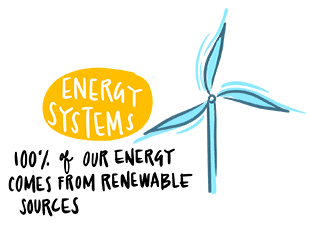
This is the focus area for you if you want to explore these questions:
- What’s the next frontier of innovation in how we power our lives through sustainable, renewable energy resources?
- How do we dramatically expand our use of renewable energy sources?
- How do we accelerate the transition off fossil fuel using vehicles and appliances?
- How do we create an energy system that creates both safe, reliable and affordable energy while also enabling new innovation and economic opportunities?
Topics Might Include:
Renewable energy | Natural gas | Emissions | Energy transition | Workforce training | Transportation | Building efficiency
ENERGY
ENERGY SUPPLY
ACHIEVING BOULDER’S 100% CLEAN ENERGY VISION
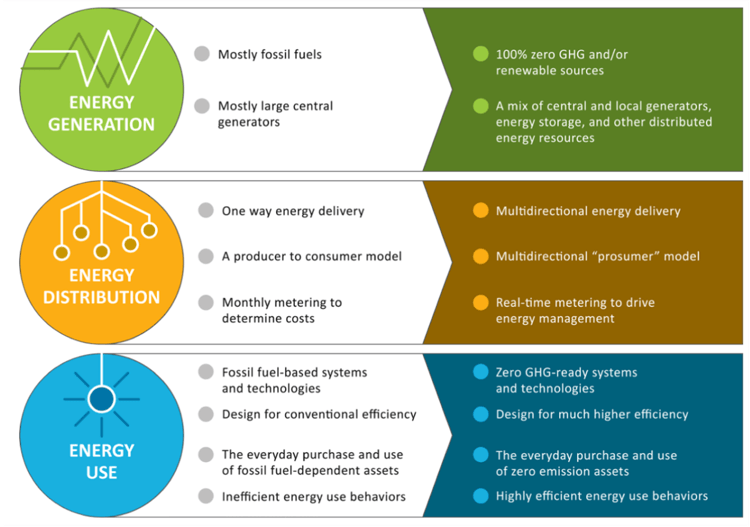
Greenhouse gas emissions from power generation are one of the leading causes of climate change. That means creating a climate-friendly, renewable energy system is among the greatest and most important challenges in our time. The time is ripe to reimagine the way we generate, buy and sell energy, so that we can lower emissions and costs.
To achieve this, Boulder has embarked on a clean energy transition by committing to power our community with 100 percent renewable electricity by 2030.
The goal is to have a clean, affordable and reliable energy system. To reach our climate goals, we need to change how we produce, manage and use energy by creating energy systems that are clean, affordable and reliable, low-carbon energy future.
ENERGY
BUILDINGS
HOW WE HEAT, COOL AND USE ENERGY MATTERS
BOULDER’S BUILDINGS TODAY
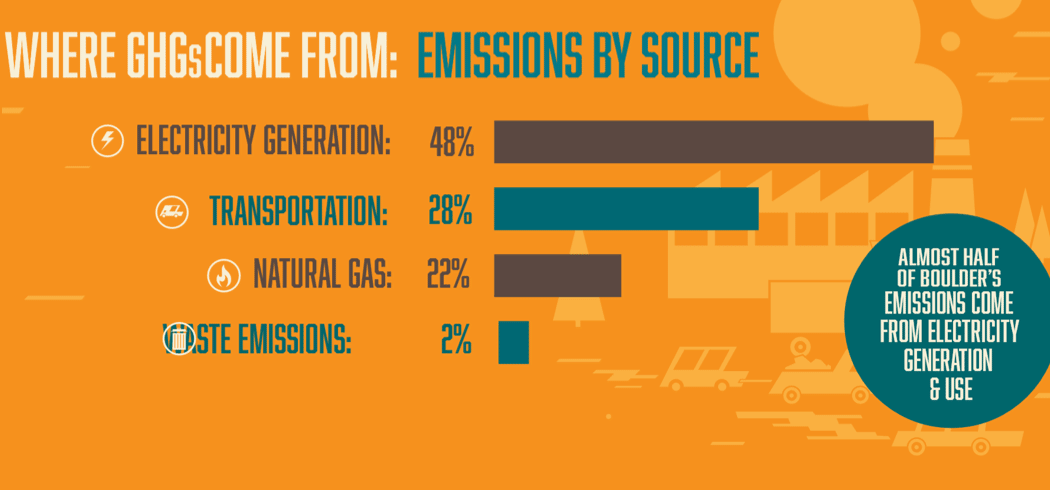
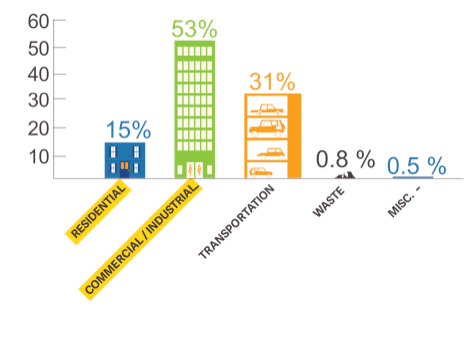
Two-thirds of the Boulder’s greenhouse gas emissions are associated with these buildings:
• 44,000 homes, apartments, and other residential units
• 3,700 commercial and industrial buildings.
Most commercial buildings and about 80% of residential units rely on natural gas for heating. Even as electricity gets cleaner, buildings will still contribute significant emissions unless we move away from natural gas.
THE COST
As the impacts of climate change are felt in terms of increasing temperature extremes, energy costs and emissions are rising.
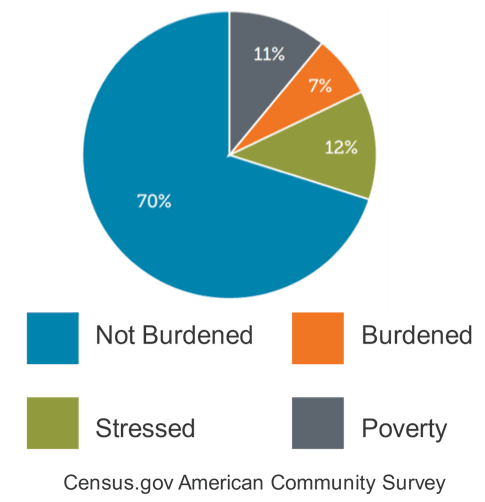
Already, nearly 30% of Colorado’s residential households are experiencing some level of financial hardship because of their energy costs. Energy affordability is critical.
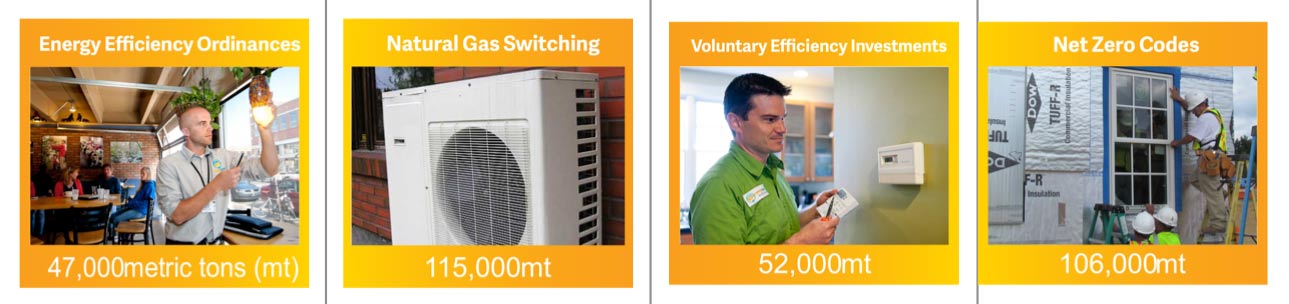
SAVING OURSELVES (METRIC) TONS OF EMISSIONS
If natural gas is replaced by renewably generated electricity, community emissions will be reduced by 16%
DID YOU KNOW?
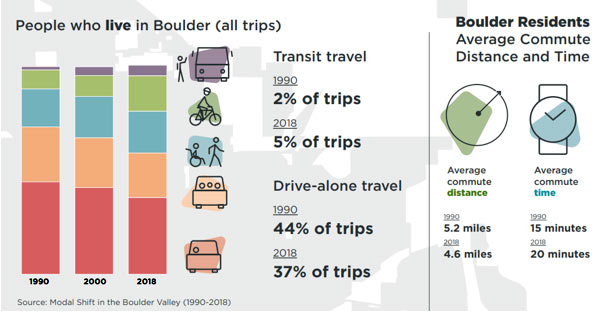
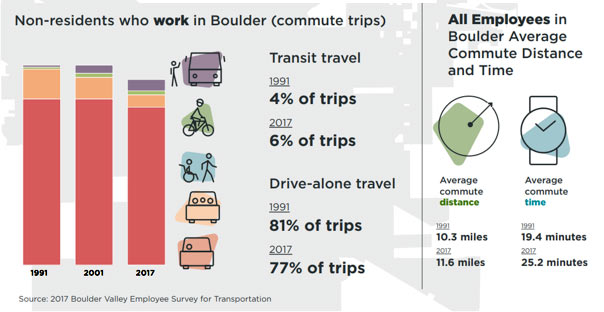
8% OF THE CITY’S EMISSIONS COME FROM AIR TRAVEL
An additional 8% is added for Boulder’s share of the regional air travel out of Denver International Airport. As the community prospers financially, drawing more and more workers and visitors from outside the city, vehicle miles traveled continue to increase.
Learn More About Our Energy
from these helpful resources, websites, and stories

Renewable Energy Summit – Recap & Key Learning
350 Colorado, the Unitarian Universalist Church of Boulder’s Climate Action Ministry, and Physicians for Social Responsibility Colorado hosted a free, public Renewable Energy Summit. Attendees had the opportunity to learn how to move beyond fracked gas in their homes and how to support the transition to 100% renewable energy where they live. Read the Recap, Watch the Video, View Presenter Slide Decks
Energy Basics
The National Renewable Energy Laboratory (NREL) is just south of Boulder in Golden, CO. You can learn a ton from a visit. But in the mean time, check out the Energy Basics section of their website. Learn about the basics of their research areas — bioenergy, geothermal, hydrogen, solar, transportation, wind, and water. Visit Site
Electricity Generation Sector Summary
Project Drawdown is a global research organization that identifies, reviews, and analyzes the most viable solutions to climate change, and shares these findings with the world. View the world’s leading resource for electricity generation solutions.
More Energy News & Resources
Colorado Electric Vehicle Plan
January 2018 Polis Administration plan to accelerate EV adoption based on 2015 EV market implementation study. Downloat PDF
How Whole Foods became ground zero in the charging wars
Narrative of public charging customer experience; identifies opportunities and challenges through the lens of Whole Foods. Read the E&E News piece
The surge of electric vehicles in US cities
June 2019 study of EV adoption, comparing across US cities, including Boulder. Download PDF
This small German town took back the power—and went fully renewable
With 100% of its electricity coming from renewable sources (and more to spare), the German town of Wolfhagen is particularly demonstrative of what can be achieved when municipalities adopt innovative approaches to the ownership and governance of key infrastructure. Read Story
Electric vehicles in Colorado: anticipating consumer demand for direct current fast charging
NREL analysis of DC fast charge need and utilization in Colorado (useful for considering charging infrastructure for Boulder EV drivers to travel outside Boulder) Download PDF
Electrification of Transportation: A Path to Decarbonization in Colorado
Performed by Boulder-based Vibrant Clean Energy, this study provides technical analysis supporting pathway to decarbonized transportation. Download PDF
From Gas to Grid: Building Charging Infrastructure to Power Electric Vehicle Demand
RMI analysis of charging infrastructure requirements for high adoption of electric vehicles. Download PDF
Electrified Transportation for All: How electrification can benefit low-income communities
Identifies benefits of transportation electrification for all with focus on low-income communities. Download PDF
Vehicle-to-grid is revving up
Description of vehicle-to-grid technology with case studies. Download PDF
Recently Submitted Comments & Suggestions
Let’s Look At: EcoPass for all Launch pilot for electric micro-mobility: shared and dockless scooters and Ebikes. We have the best multi-modal infrastructure in the country – let’s use it. Boulder Housing Partners sequestration on all properties, trees, gardens, compost with community involvement Allow HOAs to pool energy needs and share panels on units with most sun Develop micro-grids for local solar Give out free cords to make clotheslines City buildings built from adobe and strawbale Train people to learn the trades
Recent Comments About Electric Supply
- Incentives to transition off fossil fuels. We need more carrots and fewer sticks
- Boulder micro-grid
- Allow HOAs to pool energy needs and share panels on units with most sun
- Push Boulder to enforce dark sky ordinance to encourage move to more efficient dark sky fixtures
- Shut the lights off when not in use on commercial properties, including lights in parking lots and signage
- Energy conservation
- Emergency powers
- Dump Xcel
- Give out free cords to make clotheslines
- Work with HOAs to remove restrictions on clotheslines
- Go full speed ahead on municipalization
- More financially accessible
- Solar gardens – keep RECs
- Wind Source default
- Amend OSMP rules to allow solar
- #NETZEROBY2025, #ZEROBY2030
- Arts
- District thermal energy systems
- Develop micro-grids for local solar
- Community solar for renters
- Solve HOA renewables
- Get Xcel to allow us to use LED streetlights
- Boulder Housing Partners – urban sequestration, trees, gardens, composting with community involvement
- A new market for low leakage natural gas is just getting started. Leakage is monitored from wellhead to pipeline injection and the leakage rate is recorded as an amenity in a block chain platform so consumers can buy “cleaner gas”. See Xponsiv.com – Boulder should buy this – sounds interesting
Recent Comments About Energy for Buildings
- Energy Efficiency stickers declaring energy rating for building, (like MPG sticker) – require rating when property sells or rents
- Long, low-interest loans
- Passive solar design required for new construction
- Stay the course! Thanks for all your work on local power!
- Utilizing and scoring passive heating/cooling features
- Process efficiency in industrial processing
- Heat pumps
- City buildings built from adobe and strawbale
- Ban on NG in all new construction
- Guidebook for res EE
- Greenhouse efficiency improvement
- GEO thermal
- Improve rebates and incentives instead of muni (Don) – for homeowners
- READ: 3rd industrial revolution (Jeremy Rifkin)
- Programs to make solar accessible to all – city-subsidized lease?
- Train people to learn the trades (Don)
- Subsidize passive solar and passive cooling – whole house farms – subsidize tree planting for shade and for food and for insects and plant and animal diversity.
- Replace RTD w/electric vans and bikes and cars
- Slow down cars, no more growth – limit new commercial and job growth
Recent Comments About Energy for Transportation
- EcoPass for all
- Work with BVSD and Via Mobility to apply for alt fuels Colorado electric bus grants. We should be leaders on electric school buses
- Increase in transportation options for commuters and non-Boulder residents. The bus system is inadequate for commuters and not everyone can afford an electric car. This cant just be in Boulder, we have to try to make this a statewide effort
- Launch a pilot for electric micro-mobility: shared and dockless scooters and Ebikes. We have the best multi-modal infrastructure in the country – let’s use it.
- Miles traveled x gas guzzle-fication
- Electric cars are here – incentivize with carbon tax
- Local transit: small bus/van – frequent, close to home and destination
- E scooter demo days were great – have potential caveat ___ – may not be for high-density pedestrian areas (e.g. campus)
- Alternative forms of transport – any way to make them cheaper/faster than personal cars?
- Using the roads, say with EVs, is not the issue, it’s carbon. Why charge per mile of use (that is already captured in taxes) carbon tax is absolutely needed
- Require large employers to reduce in-commuter impacts with e.g. eco-passes carpool “matches”
- Make sure land use decisions take into account appropriate placement and equity
- Local RTD in Boulder does not work. Regional RTD between Boulder and Denver does work.
- Educate on the full cost of driving – the federal mileage rate surprises many people
- Free transit
- How will we recycle automotives?
- Community-wide Eco-pass – I second this, third this, fourth this.
- No yellow flashing lights – no merge lane bike lanes – SE corner of University and Broadway – leave RTD. Get vans. More mirrors by bike path tunnels and blind corners.
- Lower speed limits. Educate driver re. yield to bikes and pedestrians.
- No more growth in jobs and housing.
- More support from micro/active mobility kick scooters and skateboards
- ___ the more frequent small buses and vans
- All new city fleet vehicle purchases should be electric
- Less ICE = cleaner, quieter – world better soundscape
- Solve the first/last mile problem with smaller vehicles on more routes, like most of the developing world uses
- Work to eliminate the use of leaked fuel in small airplanes flying in route of little local airports
Local Organizations Addressing Energy
Working locally to help build the global grassroots movement to solve the climate crisis and transition to a sustainable future.

Like most Americans, we're concerned about global climate change.…
a small group of data analysts and policy wonks, organized into an employee owned consulting company working with data to understand and influence climate, energy, and electric utility policy in the public’s interest
A friendly, supportive, nonpartisan group actively engaged in tackling the very serious problem of climate change by lobbying for national legislation
working at the local, state and national level on issues related to clean energy and climate change mitigation
Providing easy to use the tools and funding necessary to reduce greenhouse gas emissions within our state.
Leading Colorado to an energy efficient and renewable energy economy through education, policy advancement, and economic development.
a coalition of organizations and individuals in support of clean energy for Boulder promoting moving forward toward municipalization
Helping homes and businesses in all Boulder County communities become more comfortable and energy efficient.
a peer-to-peer network for electric vehicle (EV) charging that harnesses the power of sharing to immediately create more reliable charging options
Fuel Switch is your source for a renewable energy home.
As a locally-owned company with a highly trained professional workforce which has completed hundreds of residential and commercial solar electric, wind, solar-wind hybrid, and power tower projects
Developing innovative and practical ways to increase efficiency and environmental practices, as well as economic sustainability, for a long list of government and corporate clients
leading voice for young people in politics around the state
One-stop-shop for business sustainability in Boulder County
supporting the most energy efficient building standard in the world through advocacy, trainings, and a supportive community
Leading provider of customized clean energy products and services to the commercial, industrial, and institutional (C&I) sector

musical performance for youth community engagement in resilience planning

Saving money and protecting the environment by advancing energy efficiency and clean transportation in Arizona, Colorado, Nevada, New Mexico, Utah and Wyoming
Collaborating with the Longmont community to cultivate a sustainable and thriving city
Should your organization be listed?
Site Partners




This site is intended to be for the community, by the community, to promote initiatives that support climate action and a just transition to new energy systems.
Site partners are nonpartisan and do not operate, control or endorse any information, products or services on externally linked pages and event listings.
BoCo Climate Justice Hive • Boulder.Earth
PO Box 1624 Boulder, CO 80306 USA • hive@boulder.earth