Resilience
Ensuring our community can withstand sudden and gradual emergencies with systems to regenerate environmental and community well being
Micro Grids | Reforestation | Neighborhood Organizations | Local Food and Energy

The capacity of individuals, institutions, businesses, communities and systems within a city to survive, adapt and thrive no matter what type of chronic stresses or disruptive changes may be experienced
Sustainability is the ongoing effort to create stable, prosperous social, economic and environmental conditions. Resilience is the capacity of these systems to undergo disruption and emerge better adapted to new conditions. The two dynamics are in constant interaction.
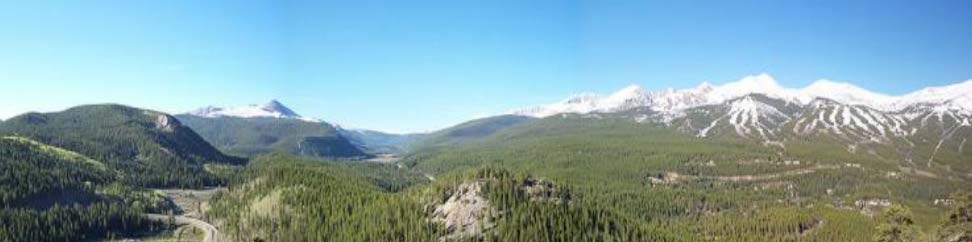
Colorado is exposed to many serious effects of climate change that make our communities vulnerable. A sector-by-sector analysis from the Colorado Energy Office lays out the challenges that state residents and leaders will have to deal with in the near future, as well as the many ways we already are, as a result of the climate emergency.

We must prepare together as a community to mitigate the impacts of these events.
Boulder has one of the highest fire risks of all communities in Colorado due to its close proximity to wildland forests.
Boulder is also one of the highest flood risk communities in the state due to its location at the confluence of multiple mountain drainages.
In addition to natural hazards, the community must also be prepared for a range of new hazards that are intentionally caused by humans including cyber security and other acts of terrorism.
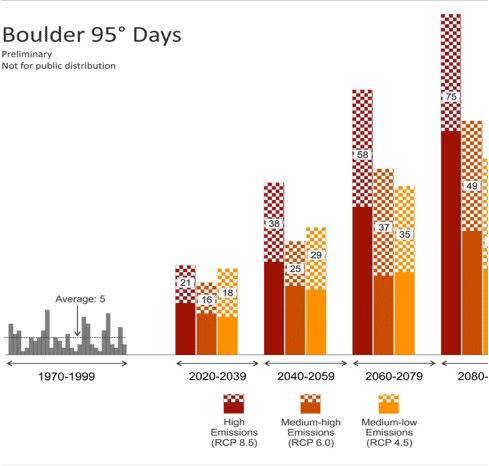
The number of days over 95 degrees Fahrenheit in Boulder have already doubled since 2000. On current trajectories, they could increase more than 5 times by 2050—from an average of 4 to more than 25!
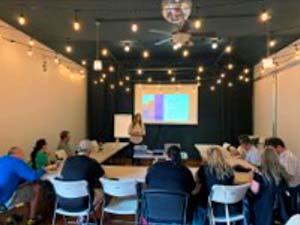
Working in close collaboration with the County and Office of Emergency Management, the city is working to enhance the city’s organizational preparedness for a range of potential hazards. This process will have multiple opportunities for community input.
The city and county are working together to develop and deliver a series of community workshop trainings designed to assist residents in building their personal, neighborhood and community resilience. The next session for Boulder residents starts in October!
Boulder County has initiated a community-based initiative to provide training and technical and financial support to members of the Latino community to assist local governments in finding ways to more effectively involve and engage members of the community that frequently do not feel comfortable taking an active role in public processes.





from these helpful resources, websites, and stories
Below are three sets of principles for dealing with an uncertain world.
First, there has to be recognition that the world is complex and uncertain!
The Resilience Alliance has good explanations of: Social-ecological Systems | Transformation | Resilience | Panarchy | Adaptive Management | Adaptive Cycle | Adaptive Capacity
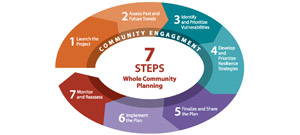
This free resource from Climate Ready Communities is built on the Geos Institute’s Whole Community Resilience framework and walks through creating a community climate resilience plan.
ICLEI has understood the risks facing communities but also the steps toward resilience, providing technical assistance to cities, towns, and counties in their efforts to adapt to climate change.
The United Nations Office for Disaster Risk Reduction (UNDRR) works with thinkers, practitioners, experts and innovators to investigate the state of risk across the globe, highlighting what’s new, spotting emerging trends, revealing disturbing patterns, examining behaviour and presenting progress in reducing risk. The findings make up the Global Assessment Report on Disaster Risk Reduction (GAR), which is published every two years.. Download PDF
California Energy Commission review of California, US and global microgrids. Download PDF
Review of Redwood Coast Airport Microgrid. Read the Microgrid Knowldege Story
Discussion of microgrid potential to protect against California wildfire threat. Read Green Tech Media story
Discussion of microgrid potential to protect against California wildfire threat. Read GovTech story
Performance review of seven microgrids in California. Download PDF
Site Partners




This site is intended to be for the community, by the community, to promote initiatives that support climate action and a just transition to new energy systems.
Site partners are nonpartisan and do not operate, control or endorse any information, products or services on externally linked pages and event listings.
BoCo Climate Justice Hive • Boulder.Earth
PO Box 1624 Boulder, CO 80306 USA • hive@boulder.earth